
Both the Fleet Director and a newly hired mechanic have been fired following the crash and fire of a $640,000 firetruck earlier this week. Documents obtained by WTVC-TV reveal new details about what led up to the accident and raise concerns about oversight and safety protocols within the county’s fleet management.
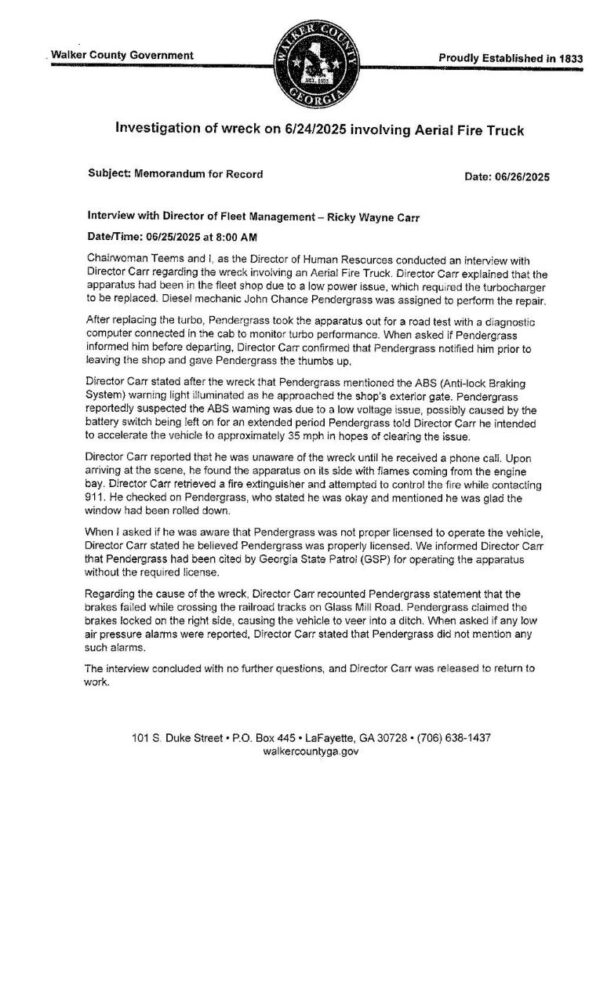
Director of Fleet Management Ricky Carr and mechanic John Chance Pendergrass were both terminated after conflicting accounts emerged regarding a test drive that ended in the firetruck overturning and catching fire.
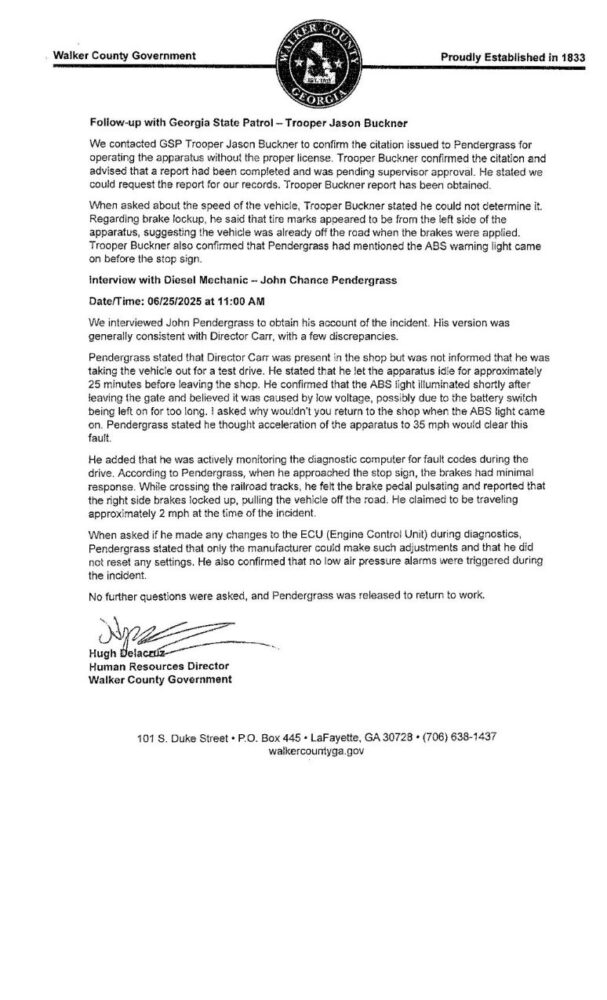
According to records reviewed by WTVC-TV, Pendergrass was behind the wheel of the firetruck when it crashed on Old Lafayette Road near Glass Mill Road. The Georgia State Patrol reported that Pendergrass lost control of the truck as he approached railroad tracks. He claimed he attempted to stop at a stop sign, but the brakes failed to engage.
Documents show that Pendergrass did not have the proper commercial driver’s license to operate the heavy vehicle—a violation for which he was cited by the Georgia State Patrol.
Carr, in an interview following the crash, said he gave Pendergrass permission to test drive the truck. However, Pendergrass disputed that, telling investigators Carr was unaware he was taking the vehicle out.
After the wreck, Carr reported that Pendergrass mentioned the truck’s ABS (Anti-lock Braking System) warning light came on before leaving the county’s fleet shop. In a written statement, Pendergrass suggested a low voltage issue may have triggered the warning—possibly due to the battery switch being left on too long. He told Carr he accelerated to around 35 mph in an attempt to clear the warning.
However, a Georgia State Patrol trooper noted in the crash report that tire marks indicated the truck had already veered off the road before the brakes were applied.
Walker County Chairwoman Angie Teems also consulted an experienced diesel mechanic who had previously worked on county fire trucks. The mechanic told her that in over 40 years of work, he had never seen a brake failure behave as described and stated the vehicle’s reaction did not match the typical behavior during brake failure.
Making matters worse, the firetruck—valued at $640,185—was only covered by liability insurance, leaving open questions about whether taxpayers will have to cover the cost of replacement or repairs.
In a memo, Teems criticized Carr for failing to supervise his employee properly and for putting safety second to convenience. She wrote that “he should have been aware of what his new employee was doing; and, the safety of his crew was not first on his mind, in addition to the amount of loss the county will now have to overcome.”
Teems said both terminations were necessary given the discrepancies in the accounts provided by Carr and Pendergrass and the serious consequences of the incident.